

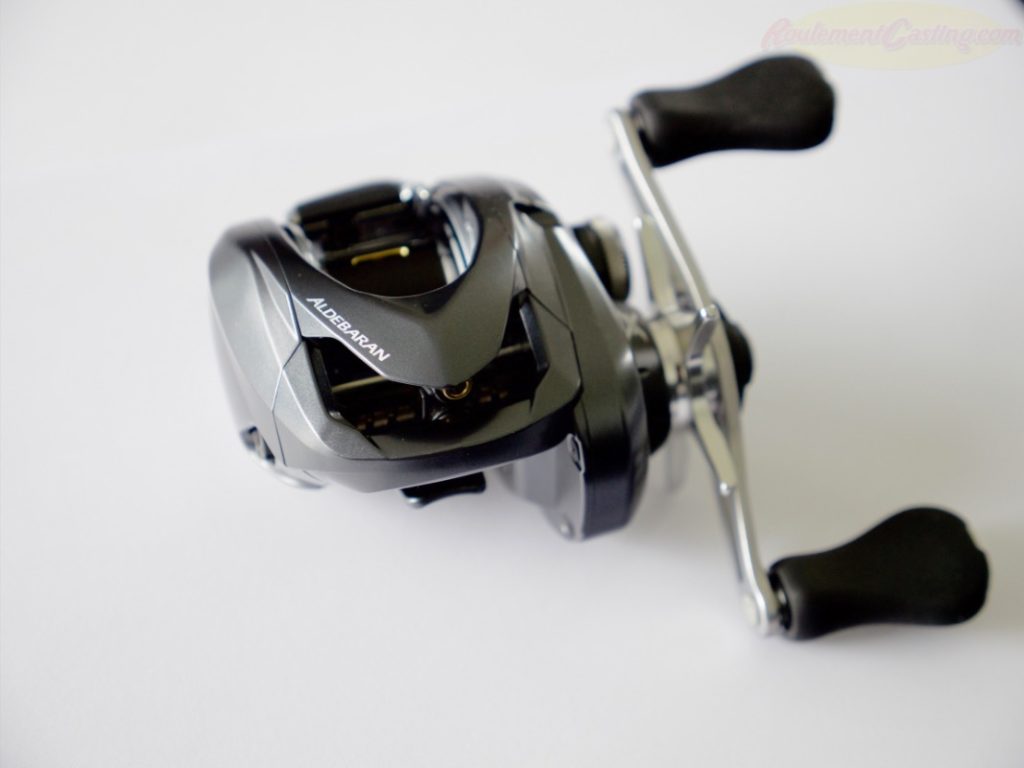
The first version of the Aldebaran, released in 2009, established itself as the benchmark for lightweight lures; the Core 51 is the ‘overseas’ version. Six years later, Shimano Japan has overhauled the Aldebaran piece by piece to make it the lightest reel on the market, weighing in at 135g. Priced at 44,000 JPY (excluding tax) in Japan, the Aldebaran sits at the same price point as the Metanium. We’ll look at the compromises Shimano had to make to achieve this featherweight design, followed by the general feedback from users in the field.
[custom_table]
| Model | Aldebaran 51HG |
|---|---|
| Ratio | 7.4:1 |
| Recovery | 74 cm |
| Weight | 135 g |
| Reel weight | 11 g |
| Bearings | 9 S A-RB + 1 |
| Crank length | 85 mm |
| Brake | 4.5 kg |
| Capacity | 10lb–100m |
| Country of manufacture | Japan |
| Retail Price in Japan | 44,000 JPY (excl. VAT) |
| US retail price | US$419.99 (excl. VAT) |
| Publix France Prices | ND |
[/custom_table]
Mechanical section
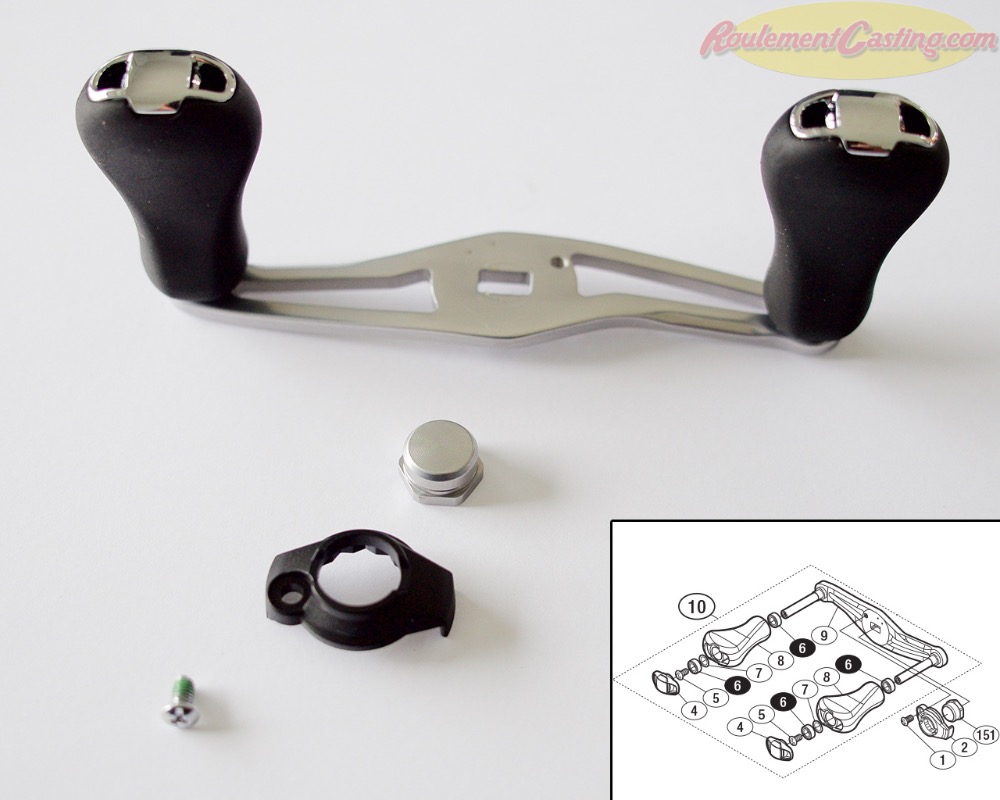
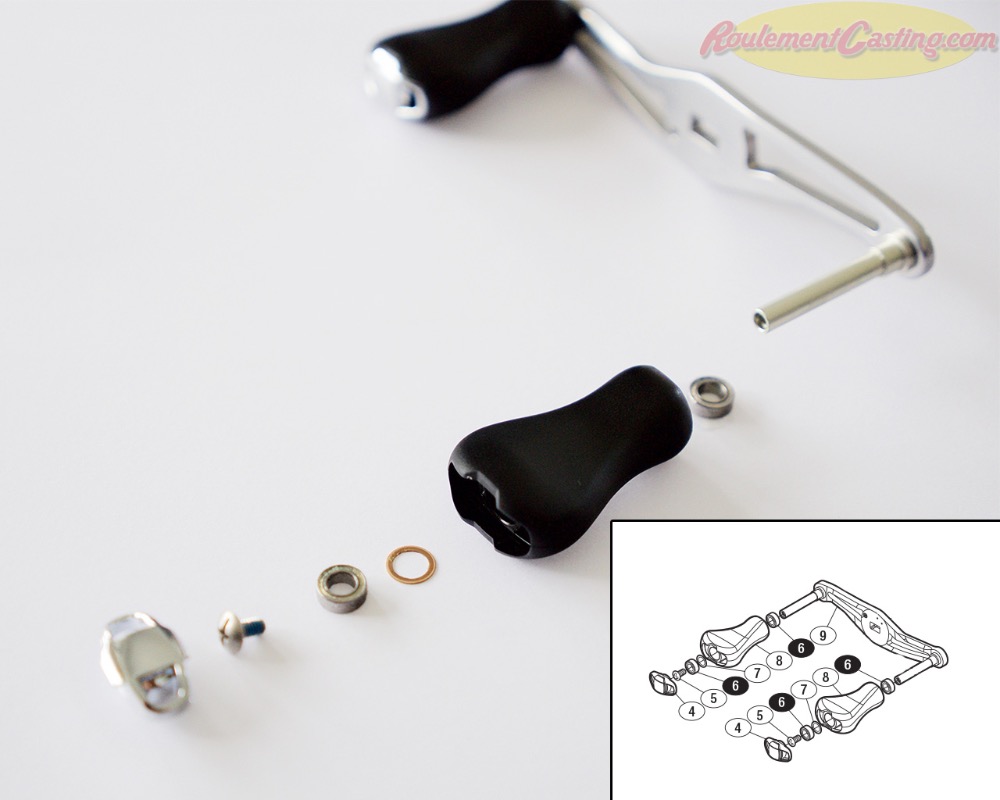
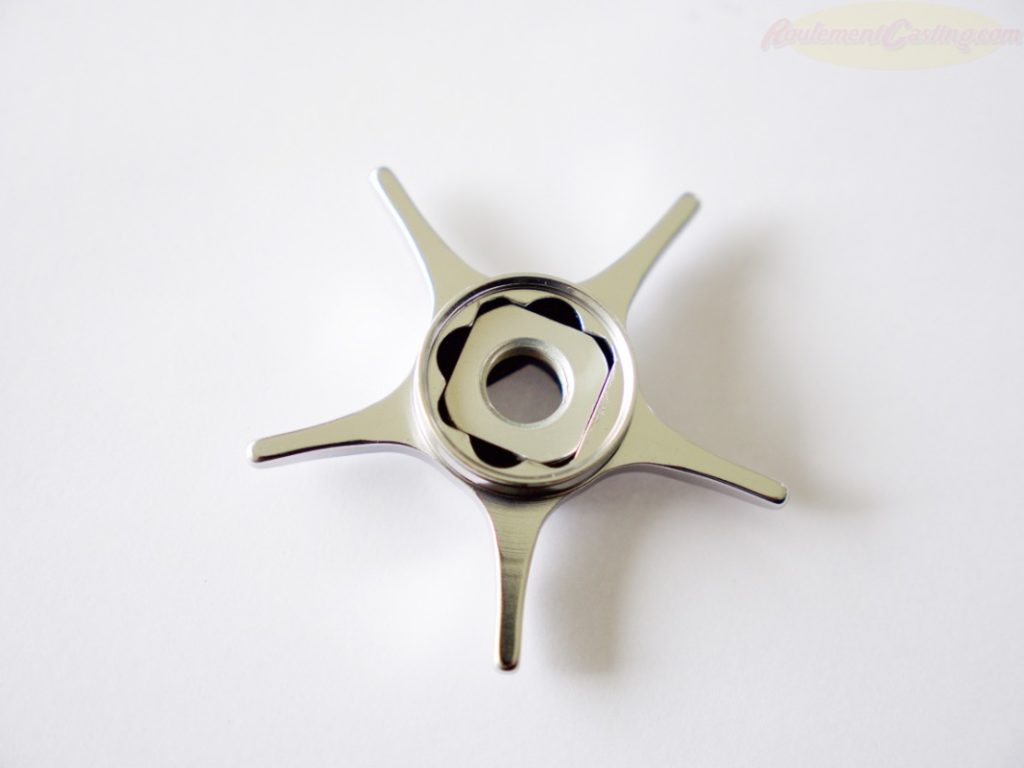
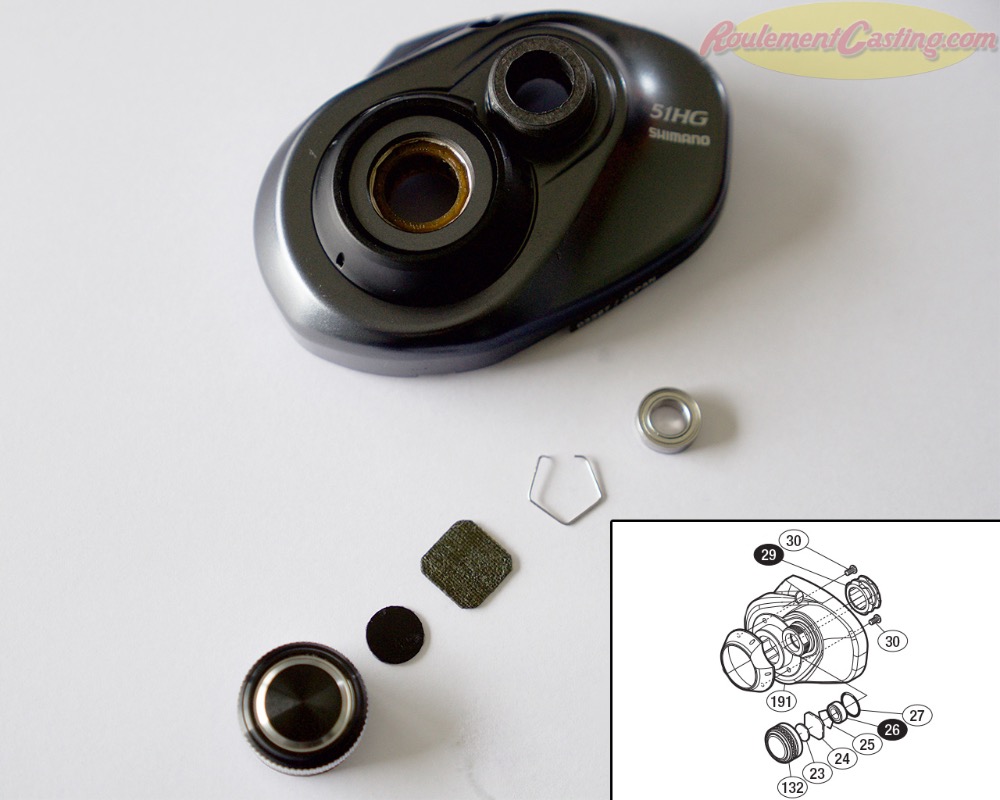
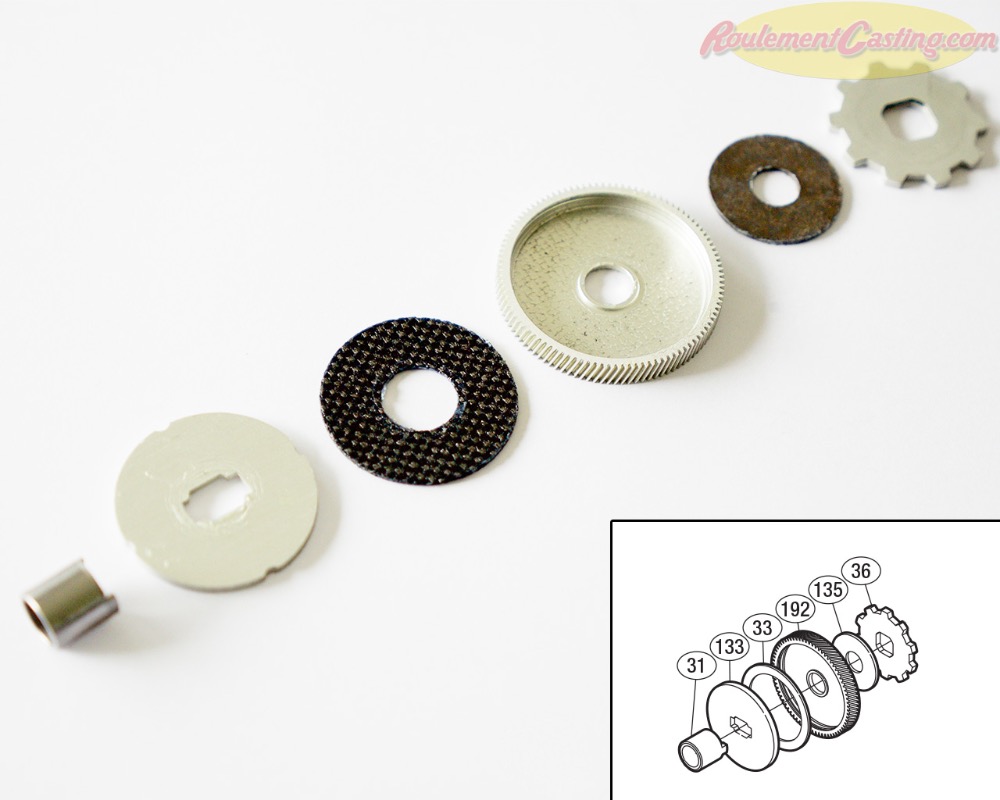

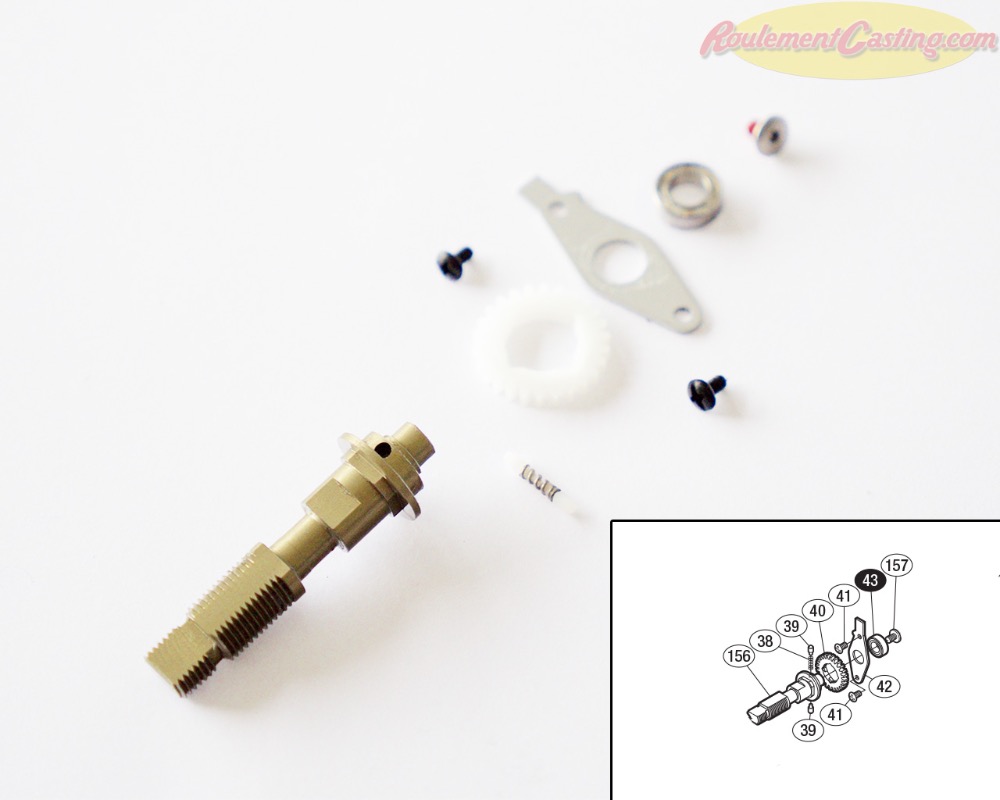
The 2015 Aldebaran features the latest Shimano grips (Knobs), currently available only on this series and its BFS LIMITED version. Flatter than standard Shimano grips such as the Technical Grip, they are very light and comfortable. The aluminium handle is beautifully crafted, reminiscent of a custom model such as the AVAIL Offset, but made from an alloy lighter than Duralium. It is probably less durable, but this shouldn’t be an issue for the light fishing for which it is designed. Fitted with four bearings, which is a welcome feature, the handle is among the very best in its class.
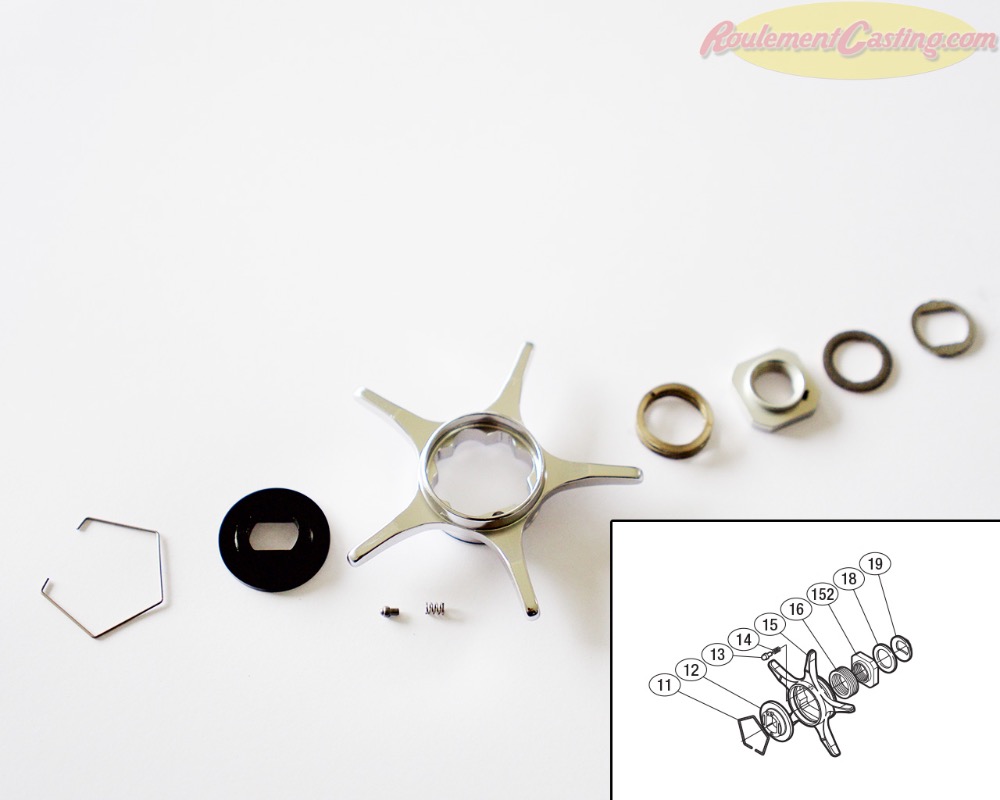
The brake star is made of aluminium; you can see that the inner part is hollowed out, and part No. 12 is also machined and hollowed out. The brake star is noisy (ratchets) like the vast majority of reels in this range. It is a pity that there is no bearing between part No. 19 and the roller bearing (No. 29).
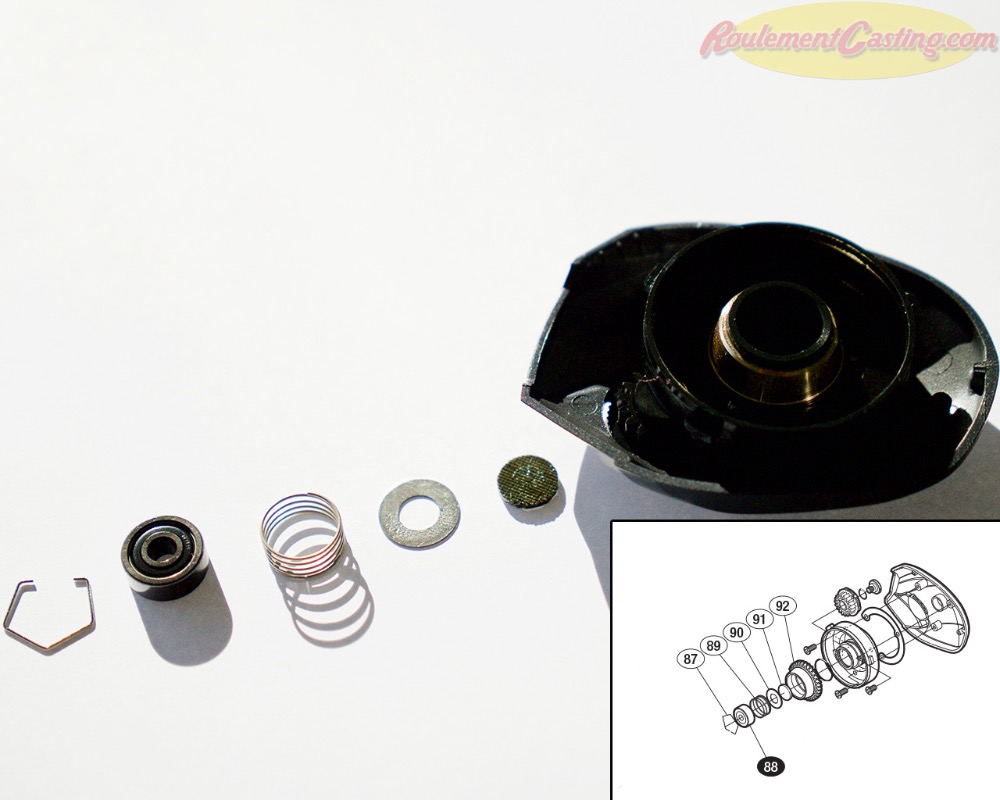
The friction brake knob, however, is not micrometric, which is a slight disappointment. In a move that is rare, if not unprecedented, for Shimano, bearing No. 26, located in plate No. 191, does not support the spool but simply the sprocket (No. 193); it is one of the two bearings that make up the X-Ship and keep part 193 perfectly aligned.
For the Shimano brake system, Shimano Japan opted for a carbon washer (No. 33) in the drive wheel (No. 192); it is disappointing to find a conventional washer under the wheel. This part is easy to replace, but it is a shame not to have a fully carbon brake as standard. The drive wheel is, as on the first generation of Aldebaran MG, made of aluminium. Whilst doubts were raised in 2009 regarding the lifespan of aluminium gears, time has shown that for the light fishing for which the Aldebaran is designed, this is not a drawback. Part No. 36 appears to be made from a different alloy to that usually used by Shimano for this component, in order to reduce weight.
Whilst the use of plastic for parts 160, 161 and 162 is standard practice among all manufacturers, this is less common for part No. 164. Made from a very hard plastic, it is reinforced by the metal part No. 163; it is this metal component that comes into contact with wheel No. 36 to engage the clutch. It remains to be seen how it holds up over time, but the materials don’t feel cheap, which is reassuring.
The shape of the crank shaft is similar to that of the shaft on the new Conquest 14’/15’ models. The Aldebaran 15′ also features a protection system first introduced on the Calcutta 13′ 301 and 401 models; parts No. 39, secured to a spring (No. 38), allow this shaft to disengage from the wheel (No. 40) should the line guide become jammed (e.g. by a finger or debris). This mechanism helps to protect the plastic spools. Shimano Japan has not publicised this feature, even though it is one of the Conquest’s key selling points.
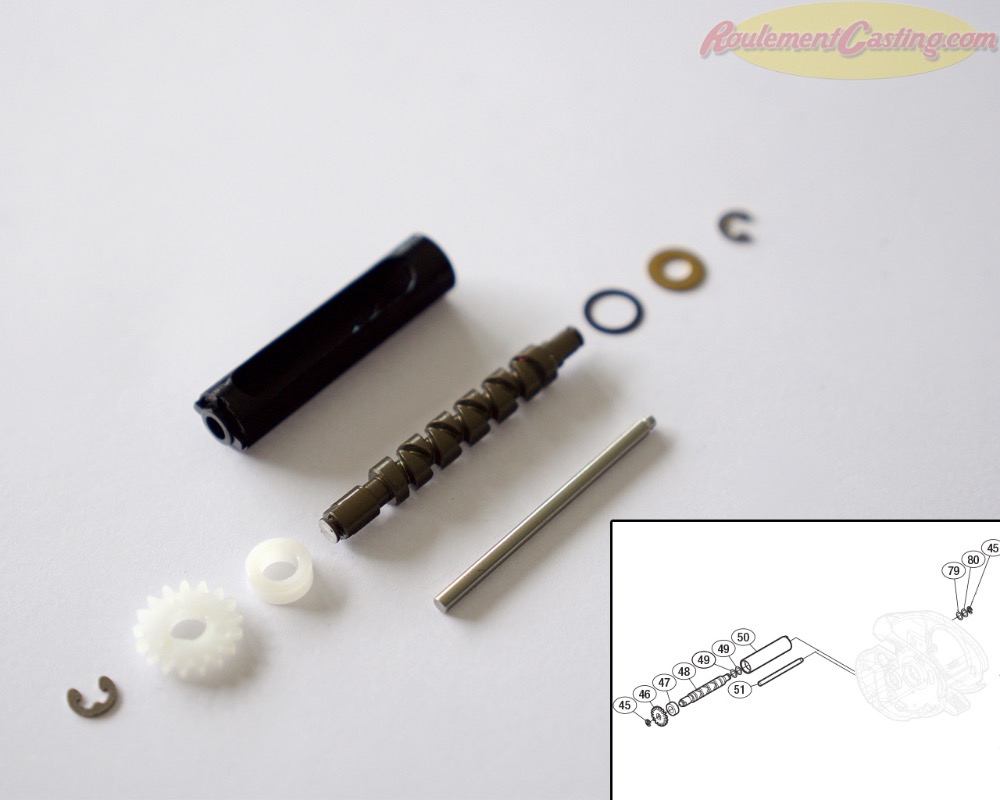
As for the line guide section, the protection system allows for the use of a thinner spool (No. 46), similar to the one used on the New Conquest models. The disappointment lies in the use of a plastic bearing (No. 47) instead of a ball bearing. However, it can easily be replaced with a ball bearing R5
The oversized, tapered guide rail has been designed for maximum weight reduction, but the most significant change is the use of a plastic gear (No. 56) instead of the traditional metal one. It may be less abrasive on the worm gear (No. 48); only time will tell.
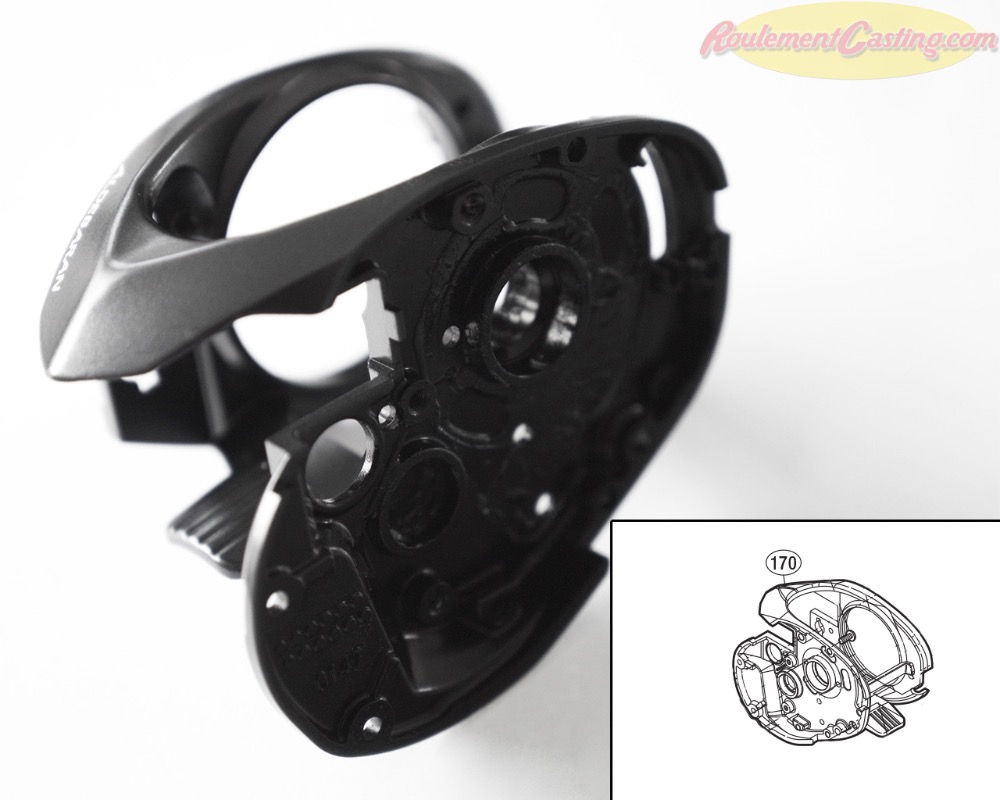
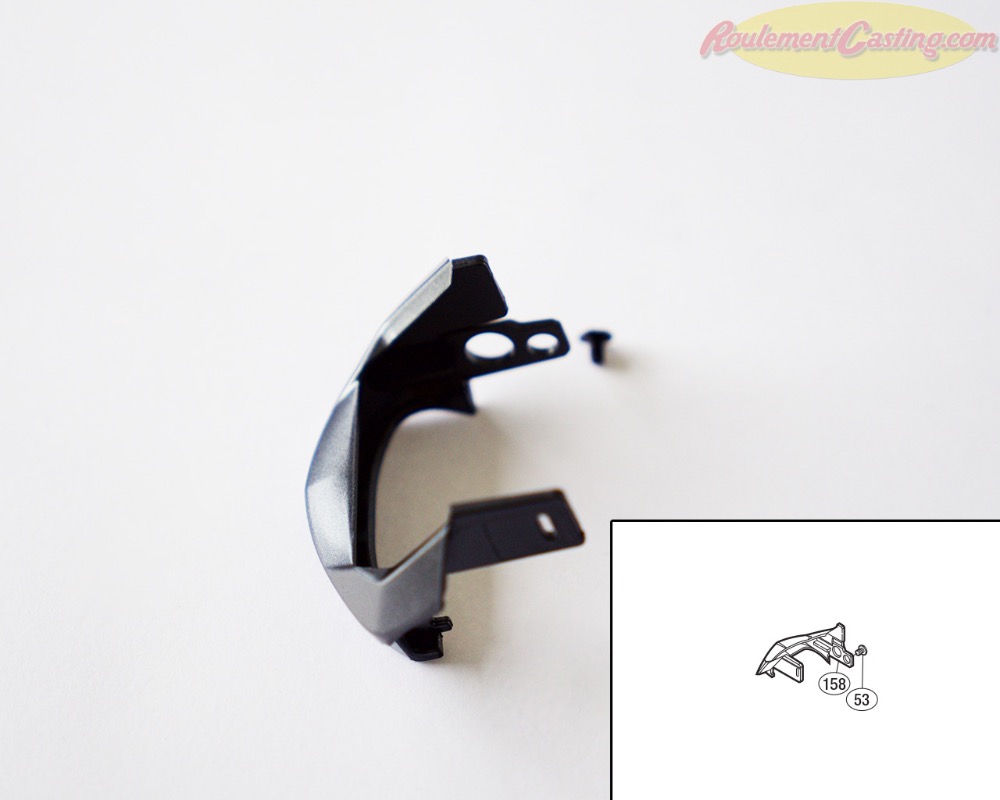
The frame itself is very light and hollow. On the left-hand side, there is a large opening designed to accommodate part No. 158. This part clips into place on the left and is secured with a screw on the right; there is a slight gap on the left-hand side, so the seal could be better. The biggest flaw of the Aldebaran 51HG is this part 158, which is too flexible and fixed rather loosely. When in use, if you tend to rest your index finger on this part of the reel, you will feel some play, giving an impression of cheapness that is inconceivable for a reel in this price range.
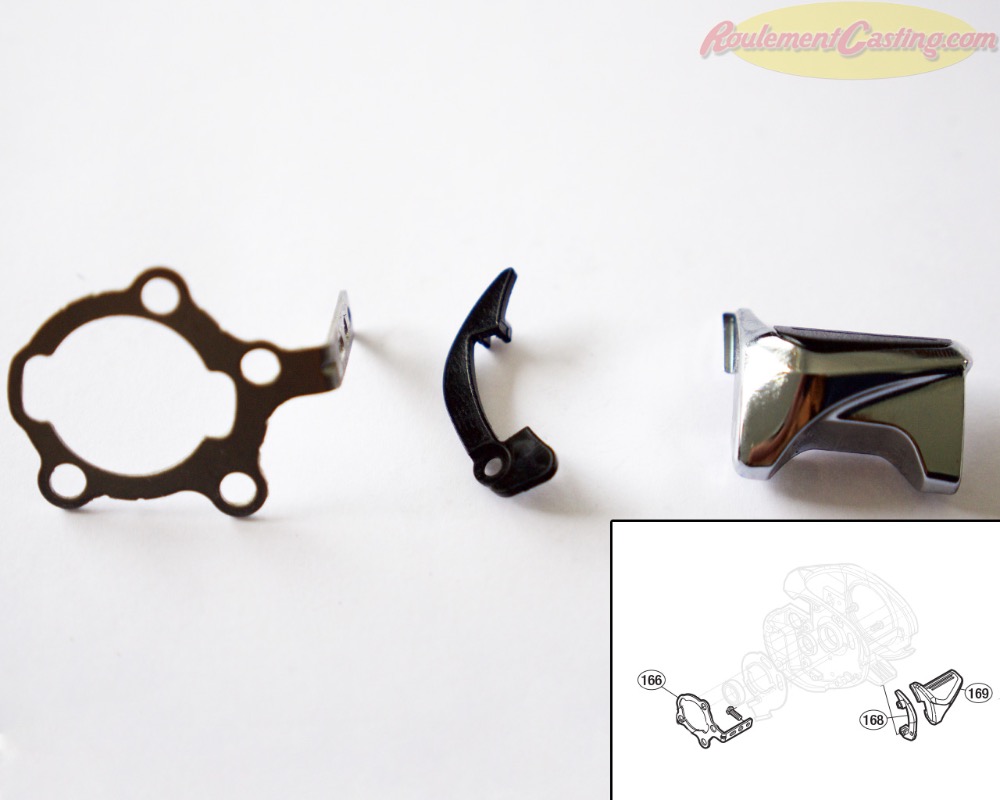
The trigger is the same as on the latest Shimano models, such as the Metanium 13′; the new feature is the tooth located on the left-hand side of the trigger, which runs between part No. 158 and the frame to better guide the movement, whereas previously the trigger simply slid over part 168.
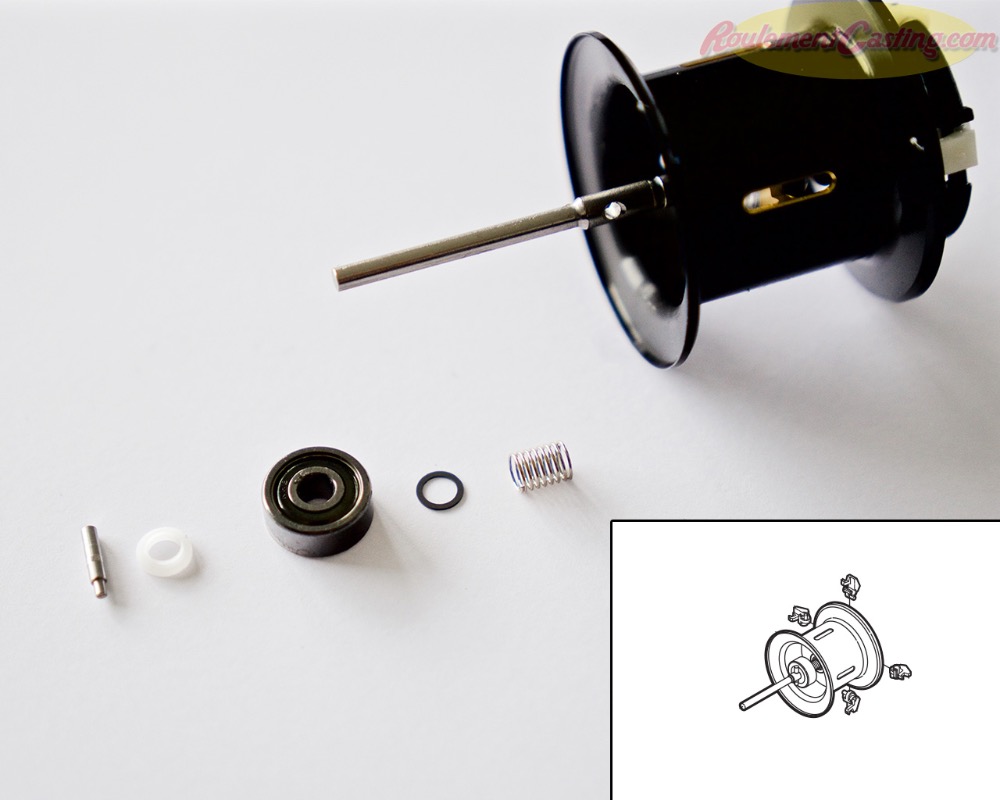
Finally, the spool and Shimano’s latest innovation – currently exclusive to the Aldebaran 15′ – the SILENT TUNE. The idea is very simple: to insert a spring between the spool and the bearing on the shaft in order to limit the spool’s lateral movement when the drag is released.
Mechanics score: 7/10
Overall, the Aldebaran is well-built with minimal play and a reasonable number of bearings for its price range; however, the use of plastic for certain parts, the flimsiness of the screws and, above all, part No. 158 justify this rating.
Ergonomics:
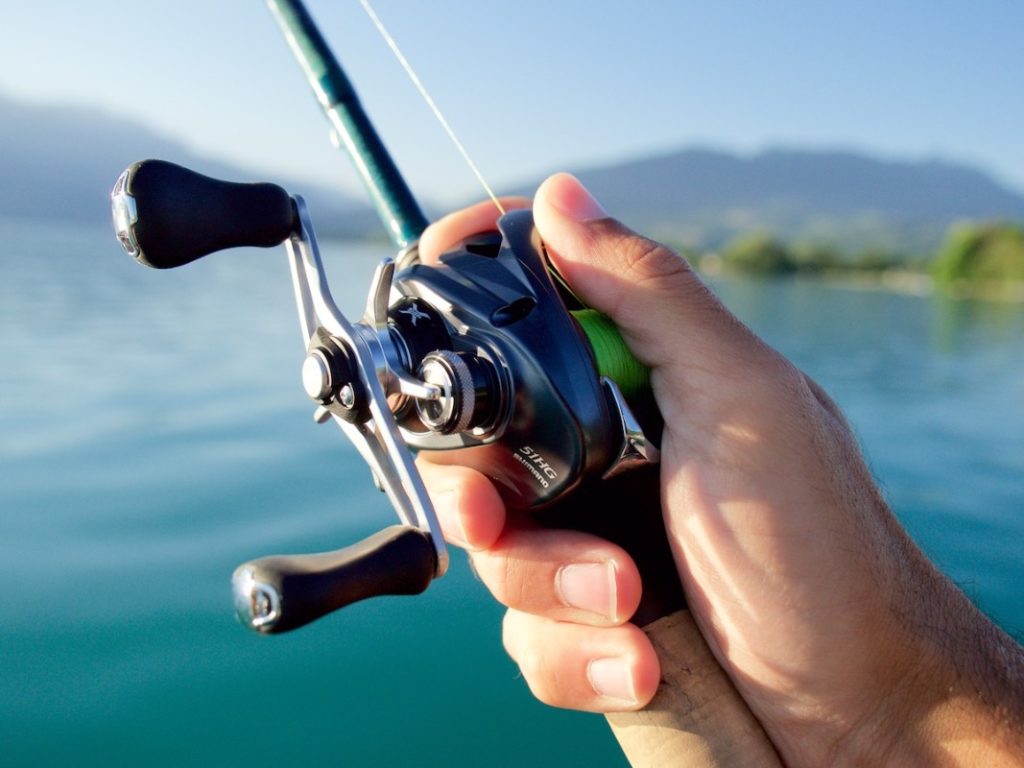
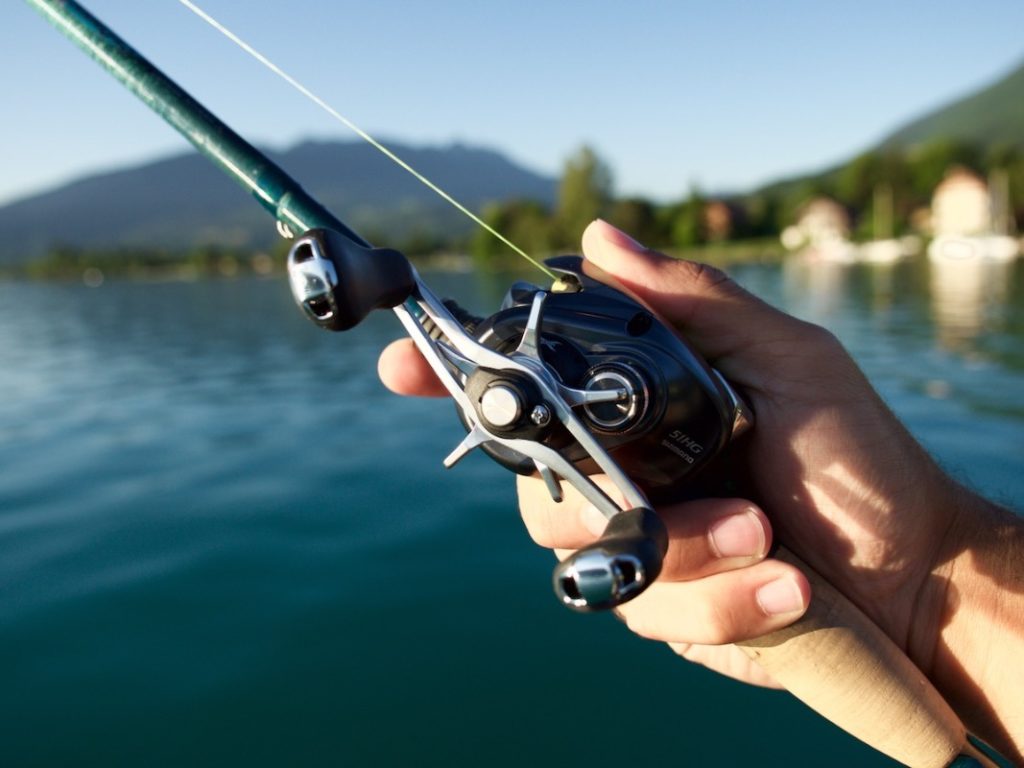
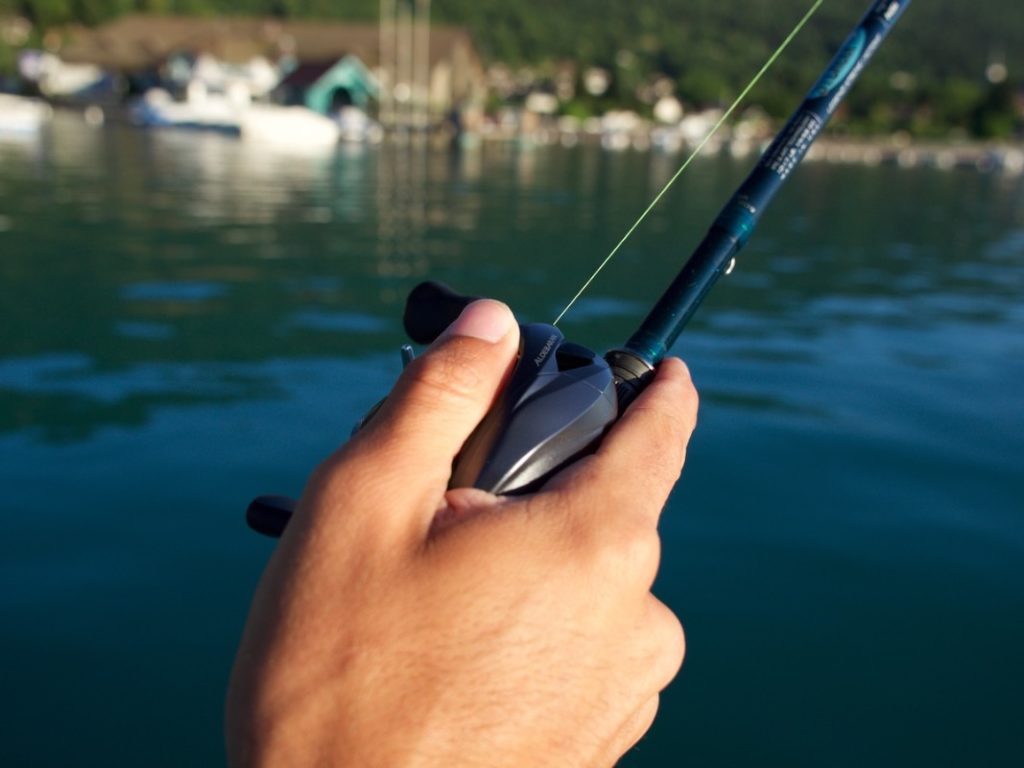
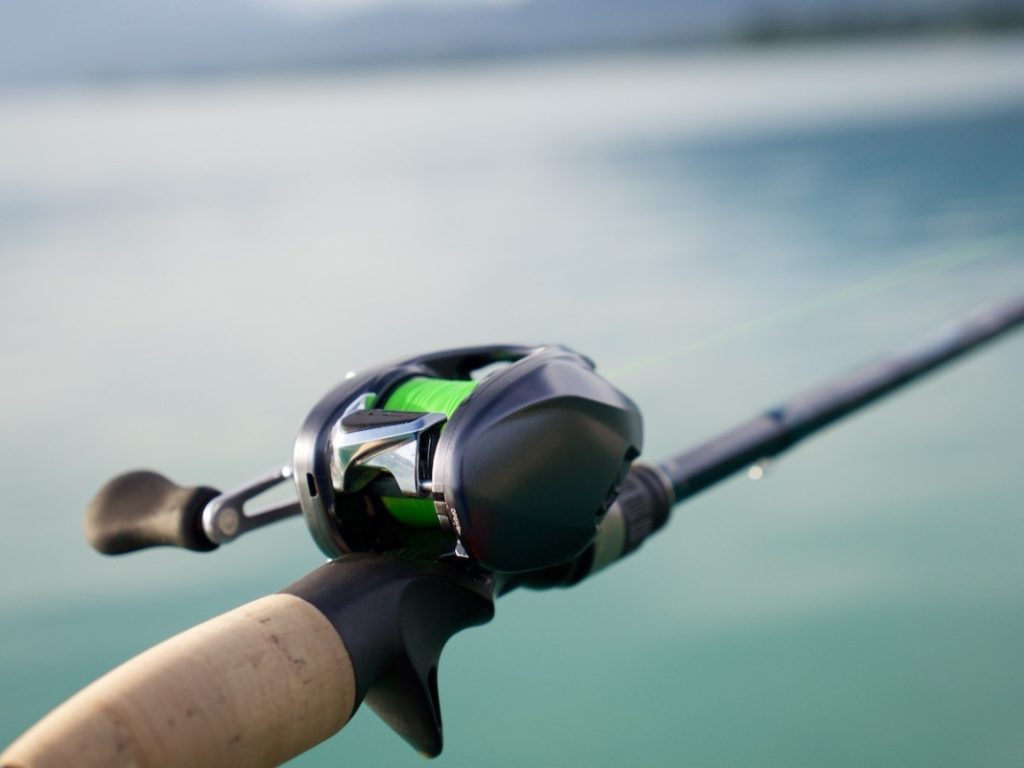

The first thing that strikes you when you pick up the Aldebaran 51HG is its weight. It feels a bit unsettling, as if you’re holding an empty reel. This 51-size model is very compact, even smaller than a Metanium. The body is beautifully crafted and, although compact, its position on the rod makes it very comfortable to hold, even for relatively large hands. The top is shaped to accommodate the thumb, which is particularly welcome and contributes to the Aldebaran’s excellent ergonomics.
The trigger, meanwhile, is positioned high up and falls very naturally under the thumb. The handles are lightweight without the plastic feel of some models. They are surprisingly flat for a Shimano reel, but the shape is well designed. Combined with a slightly offset 85mm handle, the whole reel is very comfortable to use. As for the SVS Infinity, accessing the external drag knob is easy and can be done quickly without any hassle; however, opening the sideplate is trickier once the reel is mounted on the rod. The sideplate is not attached to the frame in order to save weight by removing the bar, at the expense of stability when handling the reel above the water. Ergonomics rating: 9/10
Performance:
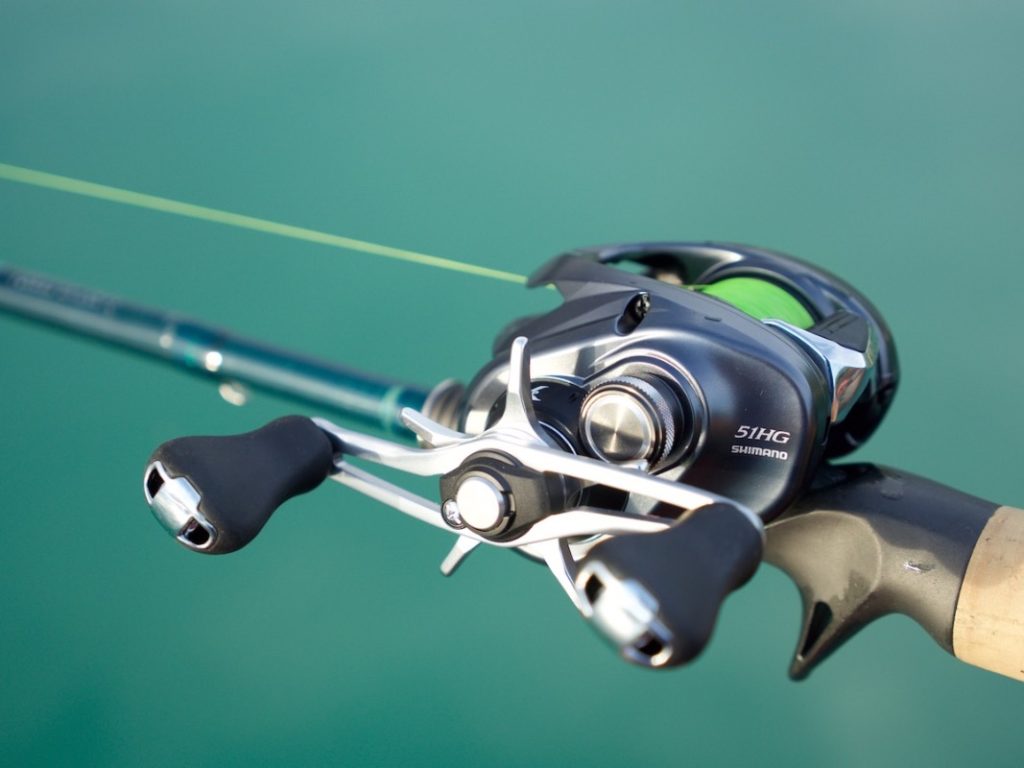
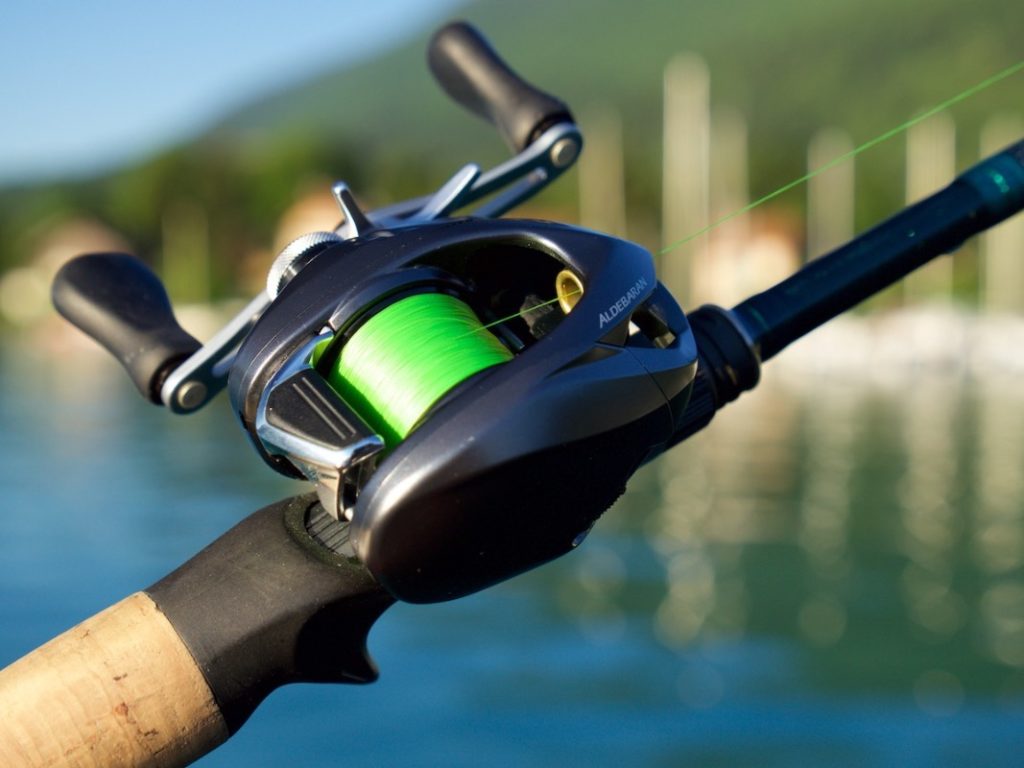
The Aldebaran was tested on a St Croix Legend Extreme XC70MF rod (7’ Medium Fast). The rod and reel combination weighs in at 240g, making it a real pleasure to use. The smooth retrieve makes the reel a joy to use, even with MR and DR crankbaits. The reel’s light weight further enhances overall sensitivity for touch-based fishing, and its manoeuvrability is incredible. It was tested with YGK WX 8 PE1 braided line and Toray Bawo 6lb nylon.
The Aldebaran is a reel designed for light fishing. This new version performs very well with lures weighing between 3 and 10g; above 10g, performance is a little disappointing – whilst it’s still decent, I find it falls short of the previous generation. It is precisely its role to be a ‘Metanium Light’, but what we gain in the lower weight range is somewhat lost in terms of versatility compared to the Core 51/Aldebaran MG. More focused on finesse than the previous generation, the Aldebaran 51HG also requires more adjustment. Indeed, the SVS Infinity needs to be regularly adjusted according to the lure to achieve optimal performance; this is particularly true given the lightness of the 51HG’s spool, whereas the SVS on the MG/Core 51, with its two counterweights, adapted to the vast majority of situations. These adjustments are no trouble at all when they can be made simply using the external dial; however, it is more of a faff when you have to add a counterweight. During the test, most situations were handled using a single counterweight and by adjusting the settings from 3 to 6.
As for the brakes, they’re powerful and responsive – there’s nothing to complain about.
Sweetness: 9/10
Rating: 7.5/10
Performance rating: 8.25/10
Conclusion:
The Aldebaran 51HG is a real pleasure to use thanks to its weight and flawless ergonomics. Suitable for use on L to M rods, it can also be fitted to a very light MH rod for sensitive fishing. The build quality is solid, although the 158 model is a little too flexible. It clearly fills a gap in the Shimano range between the Aldebaran BFS and the Metanium. More specialised than the previous version, it performs better with light lures but falls slightly short at the upper end of the spectrum.
Overall rating: 8/10